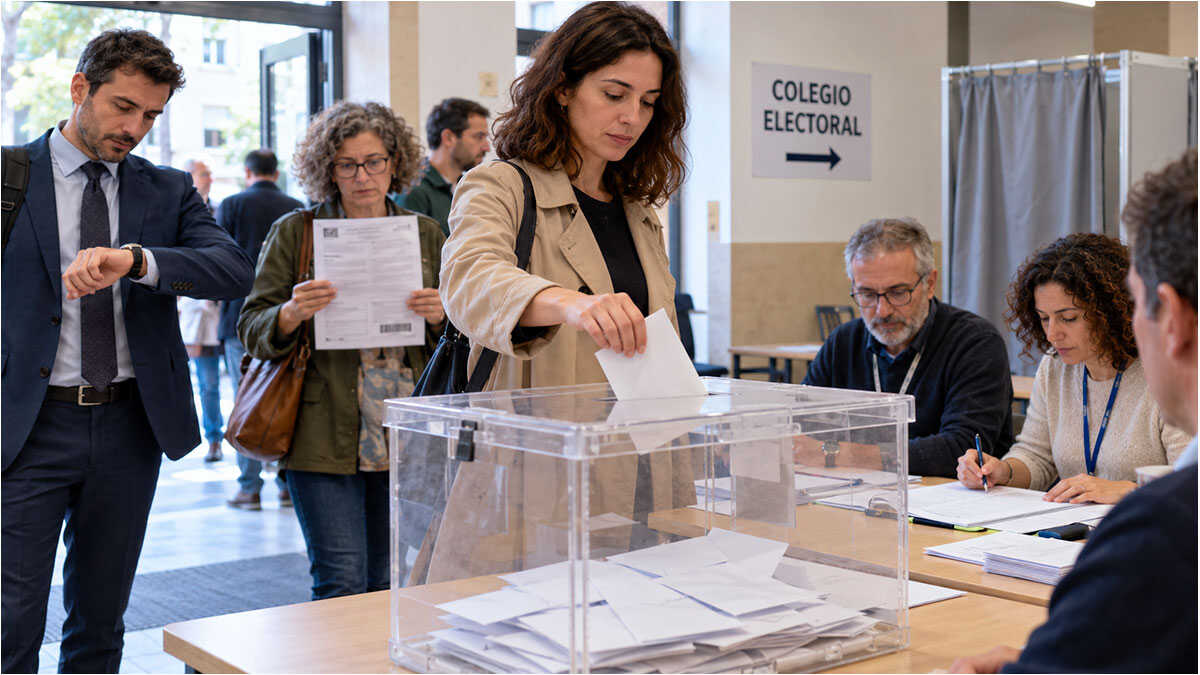
If working hours coincide with the opening of polling stations, employees may take up to four hours of paid leave to vote, depending on how long the two schedules overlap. Employers may not deduct those hours from wages or require them to be made up later, although they may decide when the leave is taken based on work requirements and subsequently request proof that the employee voted. Night-shift workers may also benefit from this leave when their schedules overlap with voting hours.
The situation is different if a citizen has been selected as the president or a member of a polling station, since attending is a legal obligation. If they were due to work that day, they are entitled to paid leave for the entire working day and may also reduce their working hours by five hours the following day. Alternates must also report to the polling station first thing in the morning, although, if they are ultimately not needed, they may leave and return to work when appropriate. Failing to appear without a justified reason may constitute an electoral offense, punishable by between three months and one year in prison or fines ranging from six to 24 months.
Having an exam, being on medical leave or having booked a trip does not automatically exempt anyone from serving on a polling station. In all these cases, an appeal must be submitted to the Area Electoral Board, which will assess the circumstances and the documentation provided. An official exam, a health problem that prevents the person from carrying out their duties or a previously booked trip involving significant financial loss may be accepted, but the decision rests with the Electoral Board.