The decline begins to become noticeable from the age of 30 and becomes more pronounced after 35. According to data released by the University of Zaragoza, at age 25 the monthly probability of achieving a natural pregnancy is around 25%, while at approximately 40 it falls to 10%. From the age of 35, the risk of chromosomal abnormalities, such as trisomy 21, and pregnancy loss also increases.
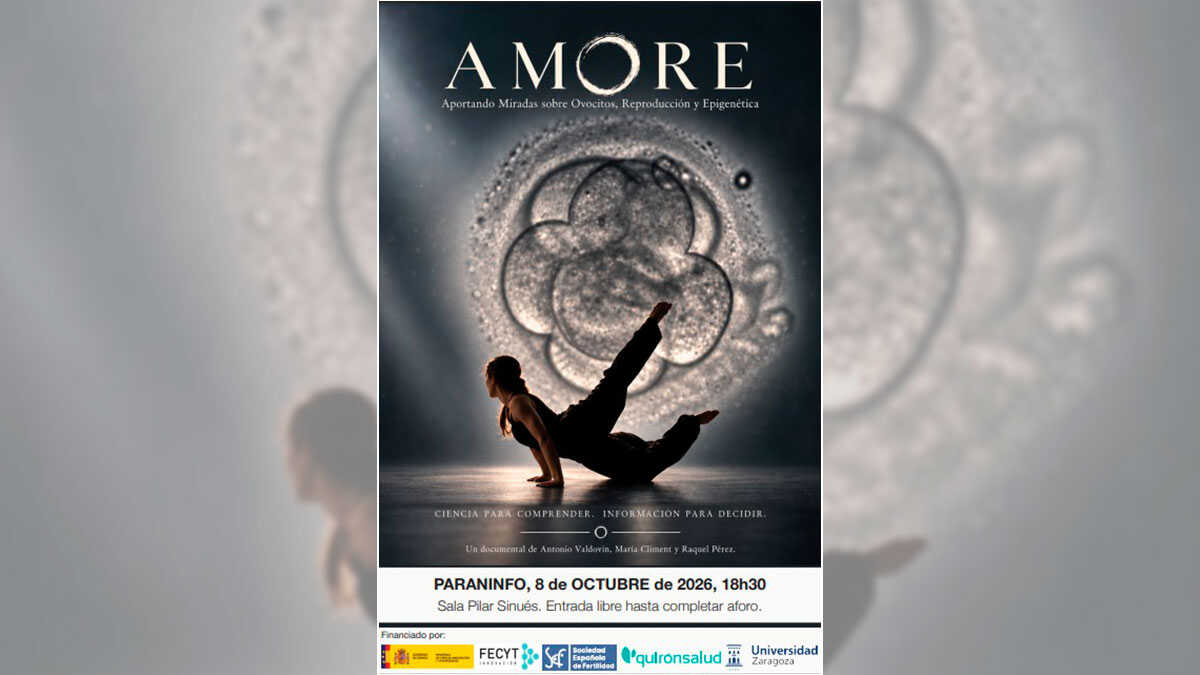
This reality lies at the heart of Amore (Aportando Miradas sobre Ovocitos, Reproducción y Edad), a short film produced by the University of Zaragoza to bring scientific information about the relationship between age and fertility to the public. The film combines scientific evidence and contemporary dance and will premiere this Thursday, October 8, at 6:30 p.m. in the Pilar Sinués Hall at the Paraninfo.
WHAT HAPPENS TO EGGS AS THE YEARS GO BY
The project is led by researchers María Climent and Raquel Pérez, professors in the Department of Anatomy and Embryology and Animal Genetics at the University of Zaragoza. Both study how maternal age causes changes in gene regulation and how these relate to proper embryonic development.
The researchers explain that the aim is to reach young people in particular and show what happens to eggs over time and how these changes can affect fertility, embryonic development and the chances of pregnancy. To do so, the short film also turns to contemporary dance, translating into movement the emotions and uncertainties associated with reproductive aging and motherhood.
Infertility is not an exceptional situation either. According to the World Health Organization, approximately one in six people of reproductive age will experience infertility at some point in their lives. Pilar Pina, vice-rector for Scientific Policy at the University of Zaragoza, has argued that access to reliable information about how reproductive capacity changes with age can enable decisions about motherhood and fatherhood to be made with greater awareness.
FROM ZARAGOZA TO NATIONAL AND INTERNATIONAL FESTIVALS
Following the screening at the Paraninfo, a roundtable discussion will be held featuring María Climent and Raquel Pérez; Antonio Urriés, director of the Assisted Reproduction Unit at Quirónsalud Zaragoza; and Aragonese director, screenwriter and producer Antonio Valdovín, who is also responsible for directing the short film.
Amore also features the voices of specialists in assisted reproduction, embryology and molecular biology, including Diana Guallar, Deborah Bourc'his, Rita Vassena, Ignacio de Blas, Pedro Muniesa, Antonio Urriés and Patricia Fauque. The artistic team includes Álvaro Sancho and dancers Carlos Campo, Ariadna Allusa, Pablo Pérez, Laura López and Ingrid Magrinyà.
After its premiere in Zaragoza, Amore will begin a program of screenings and roundtable discussions in Zaragoza and Santiago de Compostela, take part in the Utebo Film Showcase and travel to national and international festivals. The initiative is funded by the Spanish Foundation for Science and Technology (FECYT) and the Ministry of Science, Innovation and Universities, with support from the Spanish Fertility Society and Quirónsalud.