San Jorge University held the fifth edition of the Aurora Bernárdez Literary Translation Research Seminar this afternoon, an event focused on written memory, the preservation of cultural legacies and the resources needed for research and translation. Held at the Grupo San Valero Building, the seminar formed part of the activities organized by the degrees in Translation and Intercultural Communication and Translation and Applied Language Technologies to mark International Translation Day.
The event brought together professionals from libraries, documentary heritage management and the translation sector to examine, from different perspectives and across generations, how cultural memory is preserved and the role documentation plays in translation. The event also provided an opportunity to reflect on how translation helps make this heritage accessible to society.
AURORA BERNÁRDEZ’S LEGACY
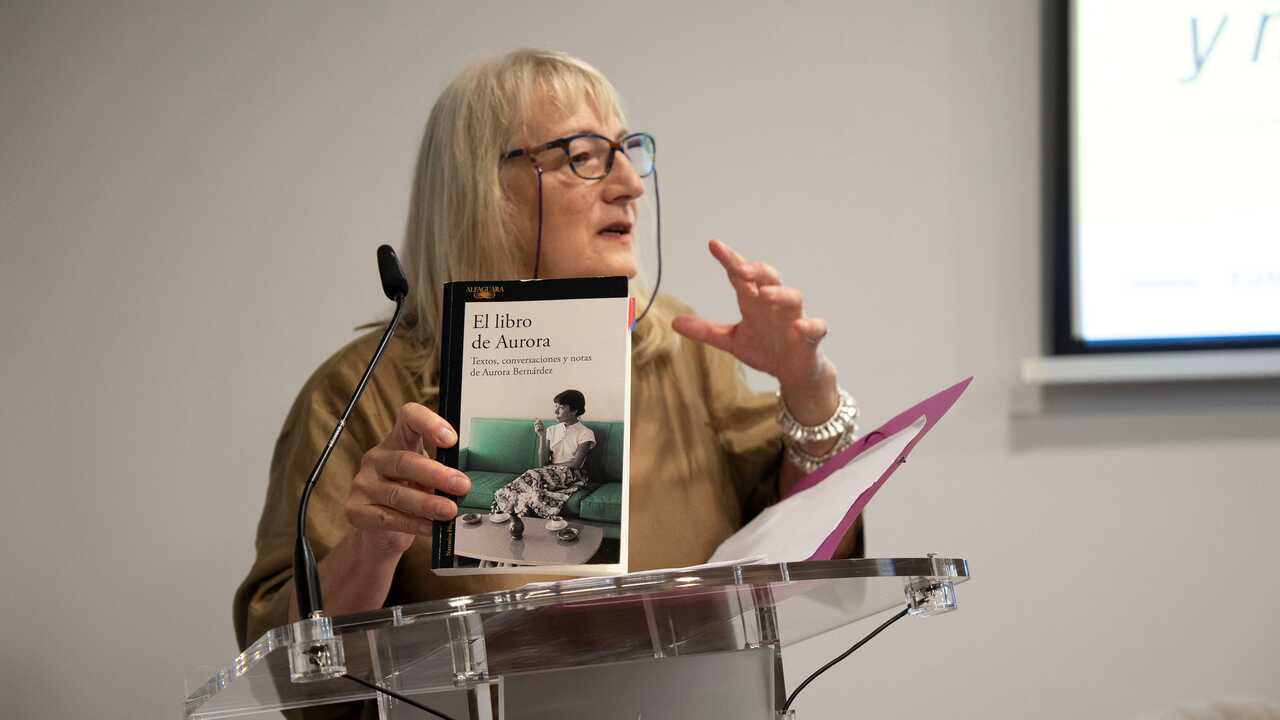
Following presentations by Lourdes Diego, vice chancellor for Student Affairs and University Outreach, and Irene Achón, director of USJ’s degree in Translation and Applied Language Technologies, journalist and editor Mariángeles Fernández delivered the opening lecture, dedicated to Aurora Bernárdez, a translator, editor and leading specialist in the work of Julio Cortázar.
Fernández reviewed some of Bernárdez’s translations throughout her career and highlighted her role as a first-rate professional, as well as the need to deepen research into her legacy.
During her speech, the speaker also highlighted Bernárdez’s discreet and reserved nature, describing her as a woman who, as she explained, “never spoke about herself” and who developed much of her career with an attitude of humility and reserve. In this regard, she recalled a phrase she considers particularly significant in approaching Bernárdez’s personality: “All her life she devoted herself to concealing herself, leaving an invisible trail.”
Throughout the lecture, she also raised various questions about the practice of translation itself: “Is there only one way to translate? How does one translate?” From these questions, she reflected on the difference between textual translation and the reinterpretation translators undertake from the perspective of their own culture and experience.
“UNIQUE BEAUTY”
The specialist also shared anecdotes related to authors such as Mario Vargas Llosa and Julio Cortázar and highlighted several aspects of Aurora Bernárdez’s personality, including her powers of observation, rational mind, curiosity and distinctive way of understanding literature. “Aurora Bernárdez knew different keys, a unique beauty,” Fernández said.
In conclusion, the journalist and editor called for the translator’s figure to be recovered and made visible: “The tribute that should be paid to Aurora is to rediscover her, make her visible and investigate what part of her remained in those translations.”
The program continued with the roundtable ‘Safeguarding memory: libraries, archives and legacies’, featuring Conchita Giménez Baratech, director of the María Moliner Library at the University of Zaragoza; Verónica López, head of the USJ Library; and Celia Martínez, reference librarian at the Julio Cortázar Library of the Juan March Foundation.
The event then continued with the roundtable ‘Yesterday, today and tomorrow: researching for translation’, which will bring together physician and translator Fernando A. Navarro, translator Irene Gómez and Sara Cortés, a student in the degree in Translation and Intercultural Communication. The roundtable will be moderated by Natalia Garrido, a lecturer in the degree in Translation and Applied Language Technologies.
AURORA BERNÁRDEZ’S PERSONAL LIBRARY
San Jorge University holds part of the personal library of writer and translator Aurora Bernárdez. With the aim of preserving and disseminating this legacy, USJ created the Aurora Bernárdez Literary Translation Research Seminar in 2023, conceived as a space for academic dialogue and exchange focused on her life and work.
Through this new edition, San Jorge University promotes research and outreach on literary translation and creates a space for dialogue among professionals, researchers and students.