QUESTION.— How did you come up with the idea for this book? ANSWER.— It came about because I had a meltdown with my teenagers last summer. I have a 13-year-old and a 15-year-old, and they both reached the same unbearable point at the same time and gave me a terrible summer. In September, all disheveled and wearing a rock T-shirt, I made an Instagram reel that began by saying: “Dear teenagers, parents are not robots,” and then I went on at them for a bit. The video started going viral and became hugely popular, and I realized I had found a niche. That was when I was offered the book, precisely because of the cheeky way I talk about teenagers.
Q.— Why do you think it is so difficult to accept the contradiction of loving your children so much while also hating them? A.— Well, it is what happens with any person. I mean, if you think about it, the fact that our parents are our parents, or our siblings are our siblings, does not give them an absolute right to be people we like. We choose to have our children, but we do not choose their personalities. If you add teenage hormones to the mix, that personality can also make everything collapse.
We choose to have our children, but we do not choose their personalities
Q.— What have you learned through motherhood that you would not have learned as a psychologist? A.— It has taught me to develop all the patience I thought I would never have. To step outside myself, which I think is extremely important—something we parents have to do, right? We have to start seeing our children as they need to be seen. We have to get rid of all those rigid ideas and beliefs we have grown up with, and even allow ourselves to be guided by them. Because if we do it well, we can improve our own version of ourselves.
Q.— The book is presented as the first step in the Cebrián method. What can people learn through this method that they would not learn simply by reading the book? A.— The book gives us the keys, a view of adolescence and a series of tips for managing the high points of life with teenagers. But the method teaches you how to do it. It is a strategy, a roadmap for parents to learn to change the thoughts that prevent them from approaching their children, understanding them, speaking with patience and understanding, and setting limits. Because it is not about giving them complete freedom; it is about learning to communicate with them, being what they need us to be and truly fulfilling our role without allowing it to overwhelm us.
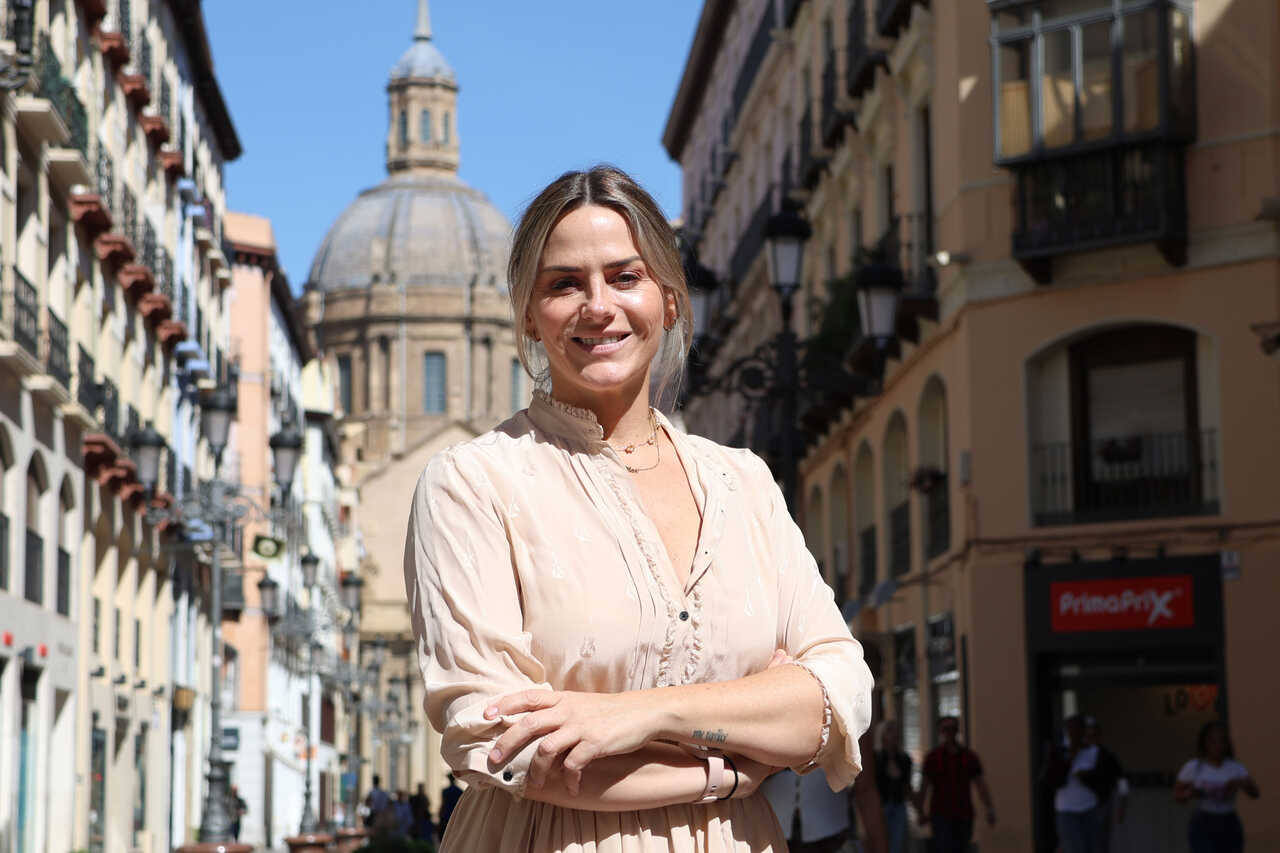
Pilar Cebrián presents the book “Dear Son, I Can’t Stand You.” Photo: Pilar Álvarez
Q.— Do you think these are the mistakes parents make most often today? A.— The main mistakes I see are communication and ego. Communication is a two-way road, and we cannot demand certain things from our teenagers without doing them ourselves first. In the end, we are their mirror. You cannot tell a teenager not to shout at you while you are shouting; that is why the method specifically helps change the emotional states that lead us to lose our temper and become mirrors for them—a way of teaching them by being the model ourselves.
And communication is also essential in that it must leave ego and power struggles aside, understanding that our teenagers’ behavior is sometimes a challenge directed at us. It is not a challenge directed at us; it is their own challenge, the challenge that adolescence itself represents. When we take it as a personal attack, that is when we create hostile communication, and our children will distance themselves from us and stop including us in a stage of life that is also very enjoyable to experience with them. It is much better to go through it by their side, and for that, we have to start by changing ourselves.
Q.— What do parents find most difficult when they begin working with you? A.— Accepting that perhaps they are not doing everything right; that there is no right or wrong way, because no one has taught us, and children are not born with an instruction manual—or with a loaf of bread under their arm. Parents have to stop for a moment and say: I need to ask for help so I can learn to understand my teenager.
I think the first thing is to look at yourself in the mirror and say, “I love my child so much that I am going to start changing myself so that he changes.” And it is incredible. If you could see the comments from the families finishing the method, they say, “My relationship with my child has changed,” and then ask, “How is that possible?” It is because you have changed, and in the end, the energy parents bring into the home has a huge impact on changing their children’s energy. We have a great deal of power.
I love my child so much that I am going to start changing myself so that he changes
Q.— How do you think education has changed in recent years, and what problems are parents facing now that did not exist 10 years ago? A.— Social media and screens. We were simpler; we got excited about silly things, we knew how to wait and we knew how to tolerate frustration. Social media and technology are making our kids feel that everything has already been invented, so they lose that excitement, nostalgia and innocence very quickly.
“If we teach them that the world is made of cotton candy, they will eventually go out into the world, encounter reality and hold us responsible for those frustrations.” Photo: Pilar Álvarez
I think that is the biggest challenge parents face: accepting screens as part of their lives and understanding that they are part of their technological leisure, while also giving them a range of experiences and activities that are really enjoyable. It is not about banning or completely restricting things, or punishing them all the time. It is about teaching them how to manage everything within their reach and make their own decisions.
Q.— You have mentioned the difficulties of setting limits. Do you think we have gone from an excessively authoritarian upbringing to one in which everything possible is done to prevent children from becoming frustrated? A.— Absolutely, and I always say that overprotection is a selfish act on the part of parents. You want to overprotect your child and prevent them from becoming frustrated because their pain hurts you, so what you really want is to free yourself from that pain. Let them experience things and suffer, and then let them come back to you so you can offer advice. But if we protect them from risks and dangers, in the end we also deprive them of the tools they need; they do not learn.
If we teach them that the world is made of cotton candy, they will eventually go out into the world, encounter reality and hold us responsible for those frustrations. Kids have to experience frustration, they have to fail, carry a backpack with the wrong books and make mistakes themselves so they can also take responsibility for the consequences of their actions. So, yes to limits—but clear, consistent and mutually agreed limits.
In the method, for example, we make extensive use of family agreements. They already have a voice and a vote; we are no longer the parents who chose what they ate, when they went to sleep or how they dressed. Now they choose, so I think it is important to sit down and create a family agreement in which they can also tell us what they need us to change.
Q.— The method is also being introduced in schools. Why is it important to train not only families but also teachers? A.— I have always said that music and the recorder are all very well, but schools should have a subject devoted to emotional education. So, through the method, we have managed to create a way of reaching schools so that teachers can guide students as they should. They can learn to understand young people and students in order to provide them with the best education possible, both academically and in terms of personal development.
Q.— After so many years working as a psychologist and your experience as a mother, what advice would you give parents who feel their relationship with their children is slipping out of their hands? A.— They should not give up. They should find a way to get back on that path, because our children love us and we have a role in their lives that no one can take away. I always say that when our children reach adolescence, we have to learn to change our position. Instead of standing opposite them, we have to stand beside them—and sometimes in the background.
When our children are born, they have tiny wings. As they grow, we repair their wings, and when they reach adolescence, we climb onto the roof and have to push them. Then they fly, fall and come back, until one day they fly to another roof.
We have to make sure those wings are well built, trust that we have spent many years before adolescence creating and building them, and above all, become a home so that when they fly to another roof, they come back to ours from time to time. Giving them wings and roots—I think that is the perfect combination.