
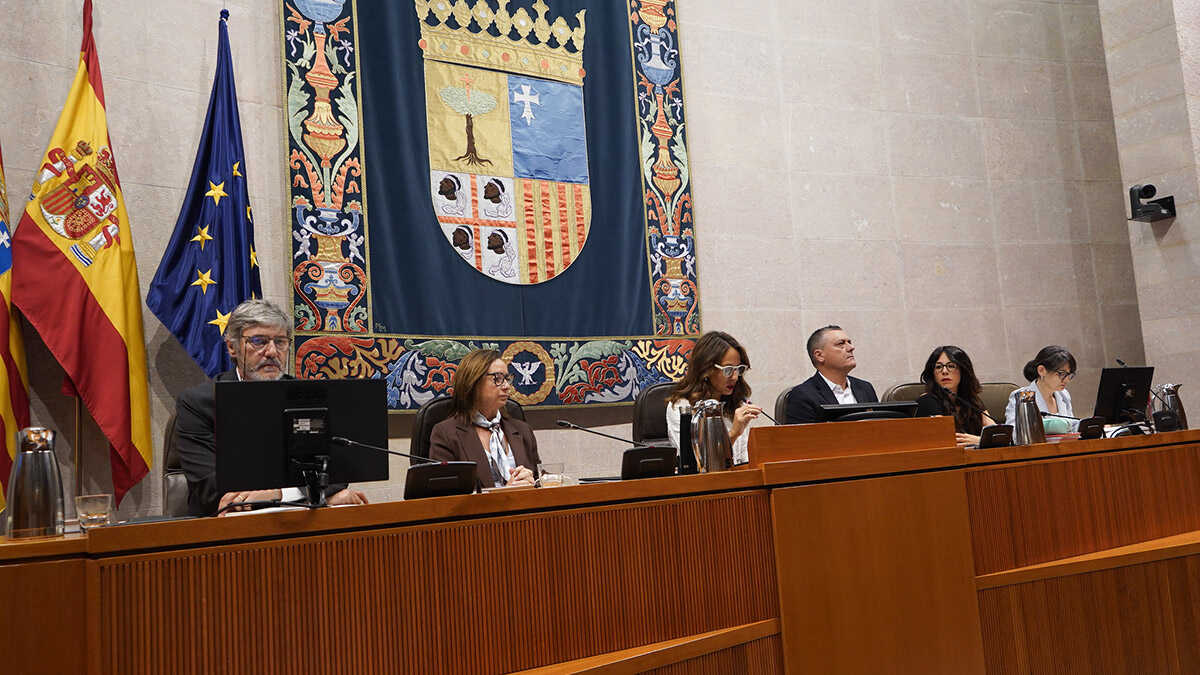
This proposal was brought forward by Izquierda Unida, whose spokesperson, Marta Abengochea, warned that “a bubble” is being created, as happened with renewables, and called for a pause to consider the benefits and drawbacks. In this regard, she recalled that the arrival of the first three data centers was expected to create 1,000 direct jobs, while there are now no more than 200 direct jobs in operation, despite the 1,000 jobs announced.
Abengochea criticized the fact that PIGAs are being processed “to order”, prioritizing business interests, while moratoriums are being promoted in other parts of the world. She therefore called for the initiative to be approved, creating a forum where all kinds of stakeholders could participate.
PP AND VOX DEFEND THE WORK ALREADY DONE
Both parties making up the regional government voted against the proposal. Their representative, Juan Pablo Artero, criticized Pedro Sánchez for saying this past Monday that he was rolling out the “red carpet” for data centers, while also “showing them the red card” by preparing a decree to screen them.
In his view, this cynicism from Spain’s prime minister has spread to the opposition in the Aragon parliament: “They only want to condemn Aragon’s development.” He therefore defended the region using its own energy rather than sending it to other regions for technology projects such as the one being promoted by the Spanish government in Tarragona.
Meanwhile, Vox legislator Vidal Giménez said that this commission was “a train that has already left the station”, since these projects are already being supervised by the Government of Aragon. “Creating a second body only duplicates the work and drains resources.”
The Vox representative defended the view that water consumption is minimal compared with the capacity of Aragon’s basins, adding that it is reduced even further by closed-loop systems. He also criticized the “bottleneck” caused by the Spanish government’s lack of investment in the electricity grid.
OPPOSITION HIGHLIGHTS LACK OF TRANSPARENCY
By contrast, the opposition voted in favor, recalling that a similar commission had been approved before the previous legislative term ended but could not be established because regional elections were called.
PSOE representative Carlos Dueso referred to the latest report by the Basilio Paraíso Foundation, which noted that of the €70 billion announced, only €30 billion is registered in the various PIGAs and DIGAs, and that only 13.9% of Aragonese companies use AI: “We install the plug and others take advantage of it.” He also called for the coexistence of these technological infrastructures with municipalities to be managed through a return fund.
CHA representative Jaime Angós accused the Government of Aragon of “hiding behind economic activity in its announcements despite their more-than-significant impact” and said the process was being handled “without transparency”. “These are projects worth billions of euros, and therefore decisions that could shape Aragon’s productive and energy model for decades to come,” he said.
Tomás Guitarte, representing Teruel Existe, said there were many questions and a lack of transparency regarding how much water and electricity the projects would consume and their impact. He also demanded clarification on who would be given priority in the event of droughts, recalling that a similar commission had already been approved during the previous legislative term but could not be established because of the subsequent elections.