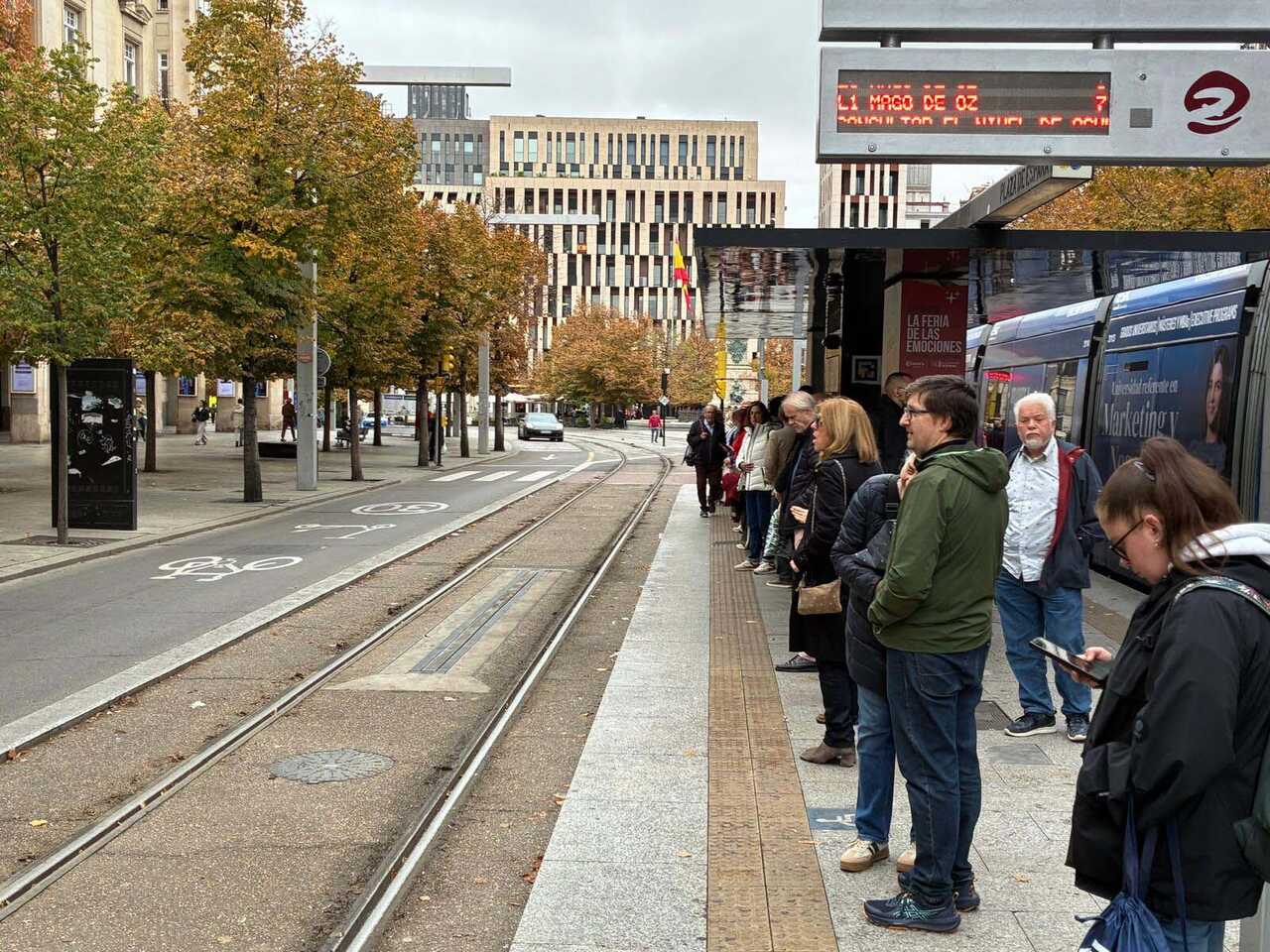
The main consequence for tram passengers was having to wait slightly longer than usual and encountering more crowded trams at certain times. Rafa Gabarre, a tram user, said he had to wait a little longer than normal: “We were pretty packed in. I told work I might be late, although in the end it wasn’t that bad.”
NEGOTIATIONS OVER THE COLLECTIVE AGREEMENT
Behind these initial stoppages is the deadlock in negotiations over the III Collective Agreement, which has lasted for almost two years. Staff are demanding maximum eight-hour shifts, more training and higher wages. One point of contention is the company’s proposal to cover shifts of up to eight and a half hours with volunteers or, if there are none, with younger employees, a formula that does not convince union representatives.
The meeting held last Friday at the Aragonese Mediation and Arbitration Service (SAMA) ended without progress, so workers are maintaining their schedule of industrial action. The call includes 21 two-hour partial stoppages spread across 19 days through November 30, from 6:45 to 8:45 a.m., 1:00 to 3:00 p.m. and 4:45 to 6:45 p.m. The disruptions affect Driving, Customer Service, Inspection and the Central Control Post, and could continue to affect journeys while no agreement is reached.