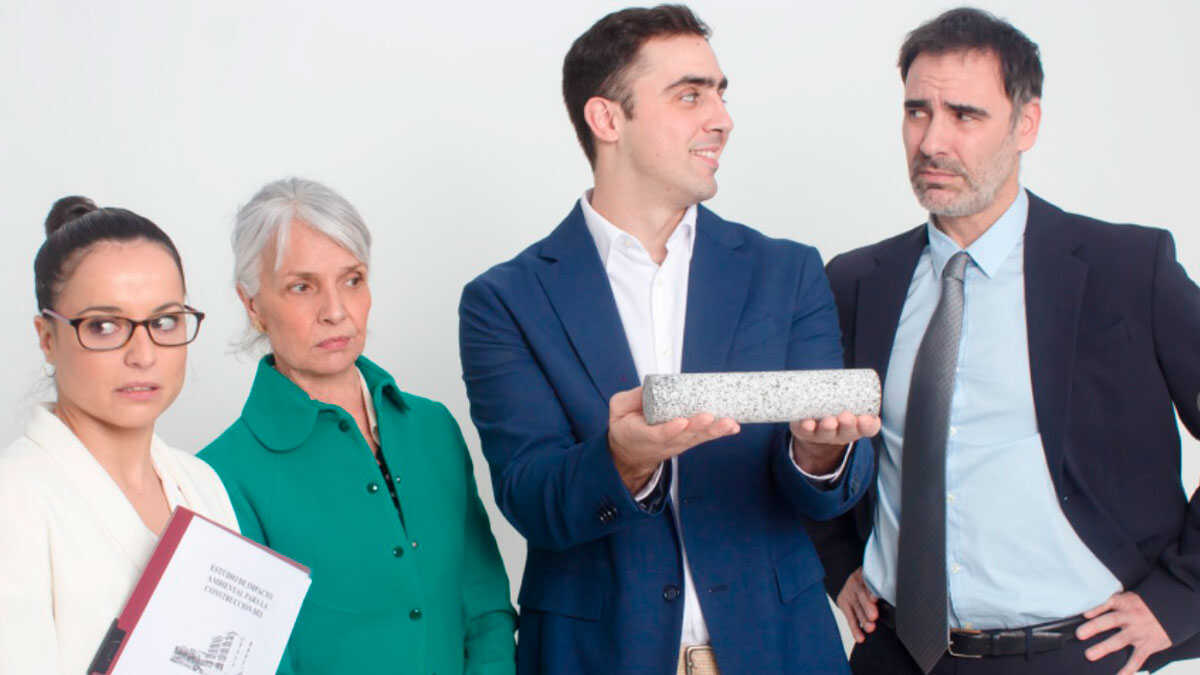
Tofé, born in Zaragoza, wrote and directed this satire about political manipulation and climate denial, a play that explores whether voters are influenced more by reality or by the narrative constructed around it. "We live immersed in politics so absurd that we only need to step slightly away from reality to enter the realm of satire," the playwright says.
The author also presents humor as a way to gain perspective and reflect on the role of power and the solutions society expects from it. The plot places the audience in the office of the president of an autonomous community. With elections just around the corner, her team is backing a project intended to become the ultimate solution: a decarbonization plant capable of extracting CO2 from the atmosphere and bringing an end to the greenhouse effect.
The problem arises when, shortly before the election, they discover that the factory will never deliver the expected results. From that point, the play's central dilemma emerges: acknowledge the failure or manipulate the truth until the mistake is transformed into a supposed success.
HUMOR AS A TOOL FOR TALKING ABOUT POLITICS
This is not the first time the Zaragoza playwright's work has crossed borders. His micro-theatre plays have been staged in Mexico, Costa Rica, Peru, Argentina, Egypt and the United States, and ten of them are included in the book Humor para rinocerontes, published by Ediciones Microteatro in 2023.
In addition to his work as a playwright and director, Tofé also works as a writer on the programme Oregón TV on Aragón Televisión. The original music for "Los árboles no votan" was composed by another of the show's creators, Zaragoza musician and composer David Angulo.
Taking part in FesTeLõn will therefore mark the play's first international step, bringing it to British audiences with English subtitles after its run in Madrid.