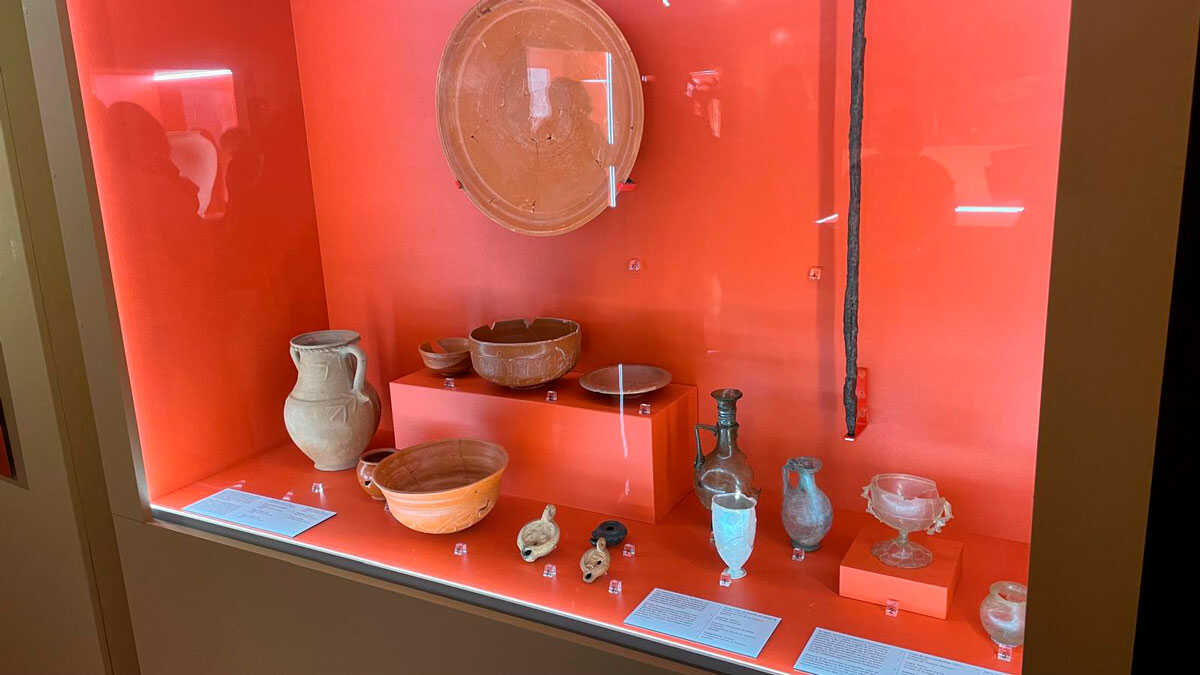
From a bronze theatrical mask and a gold ring depicting Hercules to mosaics from the House of Bacchus in Complutum, as well as previously unseen ceramics and jewelry, the exhibition "Roman Carpetania" invites visitors on a journey into the past to explore the daily life of this people, who lived alongside the Romans on the Iberian Peninsula. The exhibition will be open until March 7, 2027.
UNDERSTANDING LIFE THROUGH OBJECTS
The aim is to use these everyday objects to explain previously unknown details about life in this region after Rome's arrival: communication routes, trade, agriculture and livestock farming, urban life in cities such as Complutum, the interiors of Roman homes, personal care and leisure. "Roman Carpetania" is part of the series dedicated to the Conventus Caesaragustanus, an administrative territory of which Zaragoza was the capital and which included more than 50 cities under its control," councilor Sara Fernández said.
The 114 archaeological pieces on display come from sites such as Complutum, Titulcia and Llano de la Horca. The Regional Archaeological and Paleontological Museum of Madrid, located in Alcalá de Henares, has loaned these treasures to the Museum of the Caesaragusta Theater. "The arrival of this exhibition in Zaragoza is a particularly significant occasion," since Madrid belonged in Roman times to the same administrative territory as Zaragoza, giving the exhibition "a particular symbolic value," said Enrique Baquedano, director of the Madrid museum.
"Roman Carpetania" will be accompanied by a program of activities related to the exhibition. The lecture series will feature specialists including Sandra Azcárraga, Enrique Vaquedano, Mar Zarzalejos, Noé Conejo Delgado and Gabriela Mariana Martens.
MORE EXHIBITIONS
The Museum of the Caesaragusta Theater also has a history of temporary exhibitions devoted to the Roman world as part of the Conventus Caesaragustanus program. Its previous exhibition, "Non modo bellum. Daily Life in the Ancient City of La Caridad," featuring pieces from the Caminreal archaeological site, attracted 19,500 visitors during its run.