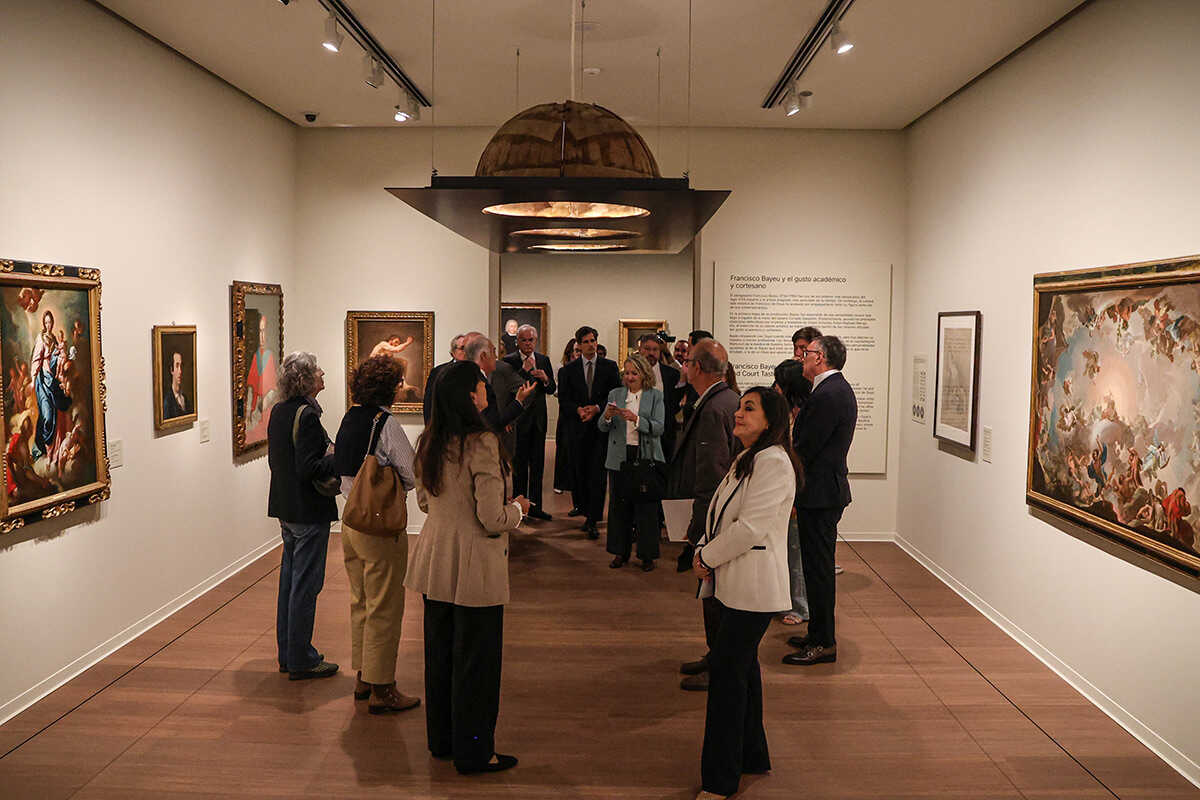
The new entrance on Santiago Street, in the area around Plaza del Pilar, caught the attention of passersby today. It is hardly surprising, since an imposing stone façade has been erected there featuring some of Goya’s most famous prints. Inside, seven floors, 4,661 square meters (1,000 more than before) and a new aesthetic lay the foundations for a museum displaying a larger collection than the Prado Museum.
The Goya Museum held its official inauguration this Thursday. Photo: Pilar Álvarez
One of the most innovative features is the inclusion of technology in the exhibition narrative. The museum offers the immersive experience “Goya, the Great Observer,” in which visitors can immerse themselves in the painter’s creative universe through enveloping projections, music, sound and visual effects. The tour includes several screens and interactive displays where visitors can discover the techniques Goya used for his prints, learn about works by the artist from Fuendetodos held in different museums around the world, or see the smallest details of some of his most famous works in ultra-high resolution.
A TOUR TO SEE “GOYA AT THE HEIGHTS”
Virtual reality also has a place in the new Goya Museum. At ten stations, visitors can put on a pair of glasses and admire some of the painter’s most impressive murals, from the frescoes in the Basilica of the Pilar to those in San Antonio de la Florida.
“The museum has changed its architecture, its spaces and its resources, incorporating new technological experiences and tours. But something remains unchanged because Goya is still at the center; no technology can replace that unique moment when a person comes face to face with a work of art,” Fundación Ibercaja director Amado Franco said.
In this regard, the new Goya Museum has enriched its collection by adding, for example, prints that had never been exhibited before, “The Velázquez Copies,” the famous models of the Pilar domes by Francisco Bayeu, and thirteen panels and a box of sketches by Joaquín Sorolla. The tour also includes “Goya’s Dream,” a work by Cuban artist Roberto Fabelo.
THE ARCHWAY GALLERY AND A UNIQUE STUDY CENTER
With a new organization of the exhibition narrative designed to contextualize Goya’s life and understand the evolution of art history, the upper area of the museum is one of its most striking features, as the archway gallery of the 16th-century house where the exhibition center is located has been restored. The itinerary also includes a room featuring the collection of artists who came before the painter, the renovated prints room, and another dedicated to 19th- and 20th-century painting and sculpture.
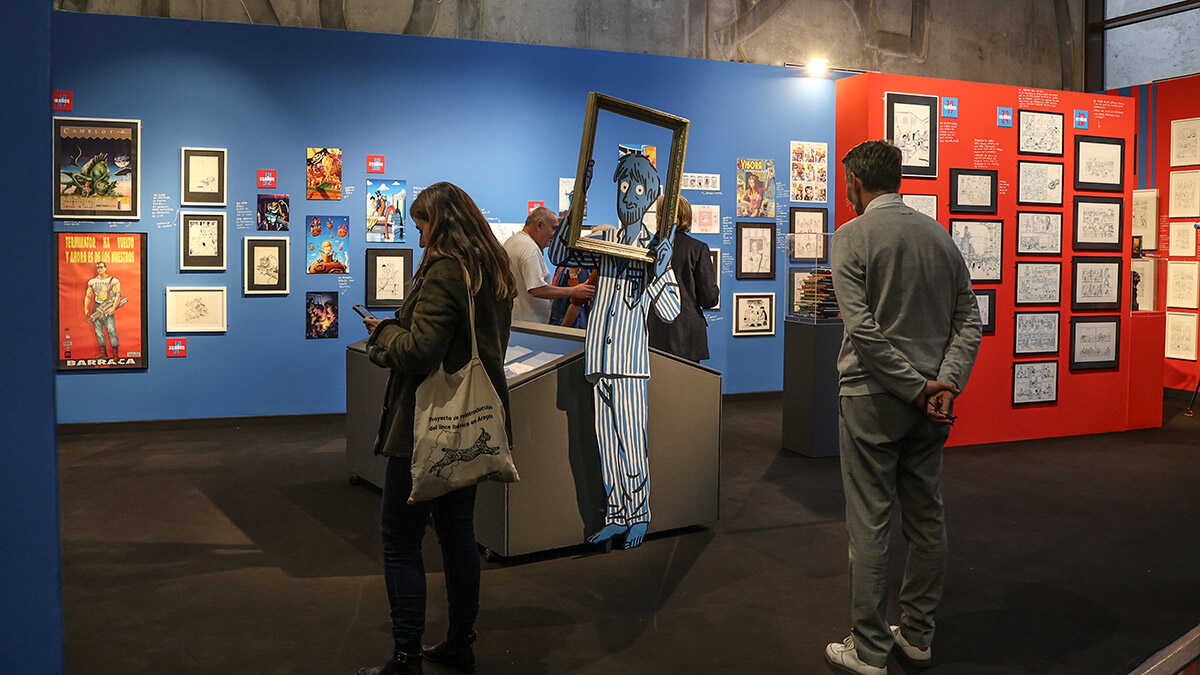
The temporary exhibition room has also been expanded, with a double-height layout to host national and international exhibitions. It is currently occupied by the exhibition “Goya Alone: The Art of Seeing.” Another major attraction is the new viewing platform overlooking Plaza del Pilar, where various events will be held and visitors will enjoy privileged views of the square.
In addition, to promote the dissemination of knowledge in academic circles, the new museum has the Francisco de Goya Study Center, with more than 1,400 specialized volumes from, among other sources, the San Luis Academy of Fine Arts and the Federico Torralba collection. This new space is dedicated to researchers, creators and specialists.
“For Zaragoza and Aragon, this museum is something very important. It is a commitment to the future, a major cultural and tourist attraction and, at the same time, a living, accessible museum for the people of Zaragoza themselves. We wanted to create a better museum. A museum capable of responding to new ways of approaching culture without giving up what makes a museum unique: its works, its history and its identity,” Fundación Ibercaja managing director José Luis Rodrigo concluded.
The new Goya Museum will open this Friday from 10:00 a.m. to 8:00 p.m. Its regular hours are Tuesday to Saturday during those same hours, and Fridays from 10:00 a.m. to 2:00 p.m.